
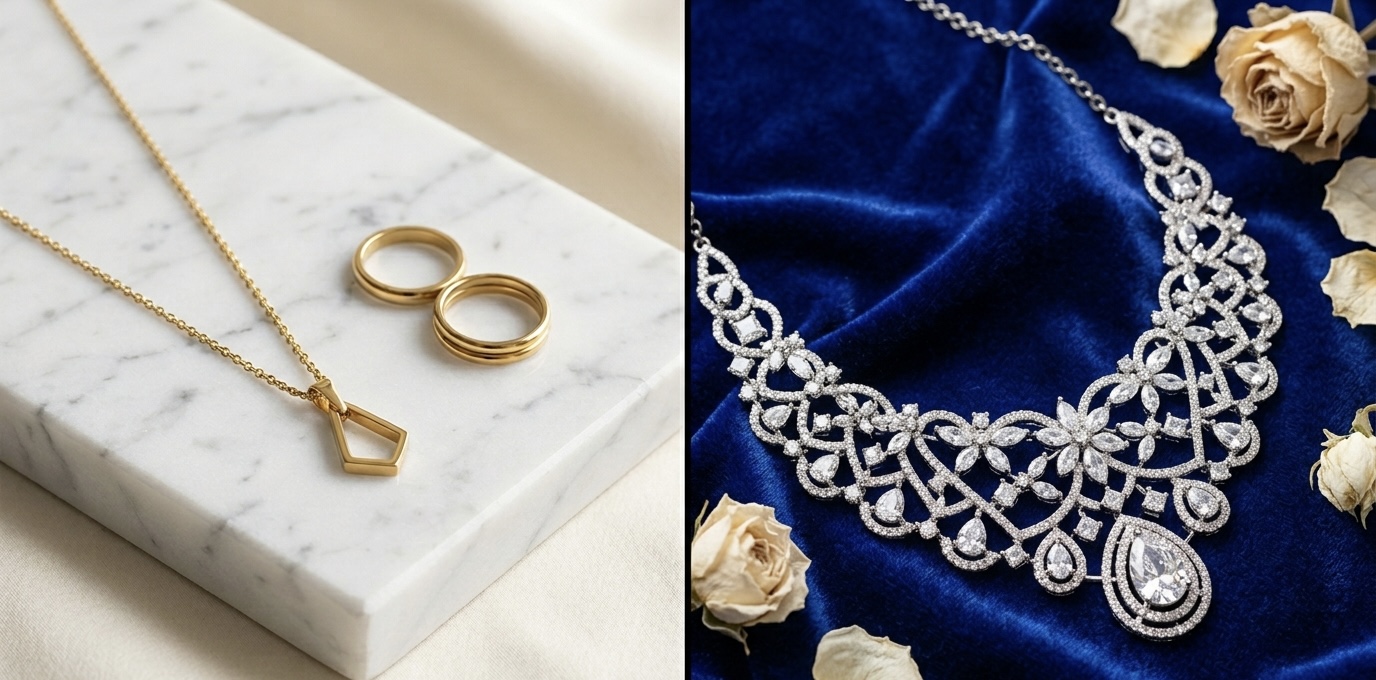
When building a high-end fashion jewelry collection, you will quickly find that the prettiest pieces come down to a choice between two legendary foundations: Stainless Steel and Copper.
Neither metal is inherently "bad"—in fact, both are absolutely essential to the fashion industry! However, they possess completely different physical properties and chemical behaviors. Understanding how they handle PVD Coating versus Electroplating will change the way you shop forever.
Here is how these two powerhouses match up under the surface.
The Art of the Mold: Structural Superpowers
The easiest way to decide between these two metals is to look at the geometry and design of the jewelry piece itself.
Copper: The Artisan’s Dream
The Trait: Copper is a naturally soft, warm, and highly malleable metal.
What it’s best for: Because it bends and shapes easily without cracking, master craftsmen use copper to create incredibly detailed, high-glam heritage pieces. Think of majestic royal chokers, highly textured Kundan or Jadau bridal layouts, and fluid, sweeping floral patterns. Stainless steel is simply too tough to be manipulated into these ultra-intricate, delicate shapes.
Stainless Steel: The Indestructible Modernist
The Trait: 316L Stainless Steel is a rigid, incredibly dense, and hard-wearing alloy.
What it’s best for: Steel excels at structural minimalism. It is perfect for clean, sleek geometric lines, modern everyday chains, thick minimalist rings, and precision-cut bracelets. Because it resists scratches, dents, and bending, it keeps its exact shape perfectly even under heavy daily abuse.
The Plating Playbook: How They Handle Gold
A base metal is only half the story; how it marries its gold coat dictates how long that beautiful shine will stay put.
- The High-Tech Match: PVD Coating
PVD (Physical Vapor Deposition) uses a high-vacuum plasma chamber to fuse gold atoms directly into the molecular lattice of the base metal.
On Stainless Steel (The Perfect Match): Stainless steel has an incredibly high melting point and a locked atomic structure. It can handle the intense, fiery vacuum energy of the PVD process flawlessly. The gold atoms lock deep inside the steel lattice, creating an entirely waterproof, sweatproof, and scratch-resistant bond that will not flake or peel over years of daily wear.
On Copper (The Structural Hurdle): Copper’s lower melting point and highly active atomic structure make it very difficult to process in extreme PVD vacuum chambers. Because copper atoms are naturally "hyperactive," they will actually try to migrate right through the gold over time, causing it to tarnish from the inside out. Therefore, you will rarely see true PVD coating applied directly to copper.
- The Traditional Match: Chemical Electroplating
Electroplating passes an electric current through a liquid gold solution to deposit a micro-thin jacket of real gold over the jewelry.
On Copper (The Layered Masterpiece): Because electroplating is a cold liquid process, it is the absolute best way to add a dazzling gold finish to complex, hand-carved copper jewelry. To stop copper atoms from interacting with the gold, premium makers apply a clever "sandwich" architecture—adding a hidden barrier shield layer (like Palladium) over the copper before the final gold coat goes on. This creates a stunning, regal finish that will last for years if worn for special occasions.
On Stainless Steel (The Budget Staple): Electroplating works perfectly fine on steel to give it a beautiful color, but because the gold layer is just a thin outer jacket sitting on top of the hard steel, everyday friction will eventually wear that micro-thin gold coat away, slowly revealing the silvery-grey steel color beneath.
⚠️ The Reality Check: Both Will Fade, But Mindful Care Wins a Lifetime
Here is a universal truth of the jewelry industry: Every type of plating on earth will eventually show wear over time. Whether it is high-tech PVD steel or premium electroplated copper, the gold color is a thin layer over a base metal. Daily friction from your skin, rubbing against clothing, and exposure to sweat or cosmetics will slowly wear the coating down.
However, with careful use, both types of jewelry can absolutely last a lifetime.
PVD Stainless Steel: Because the gold bond is so incredibly hard and fused at a molecular level, normal environment exposure won't hurt it. If you keep it away from aggressive chemical abrasives (like chlorine pools, bleach, or heavy industrial perfumes) and store it in a soft pouch to prevent physical deep scratching, it will remain brilliant for decades.
Plated Copper: Since electroplating is softer and more sensitive to moisture and friction, its lifetime depends entirely on how you treat it. If you wear these pieces intentionally—reserving them for special events, keeping them completely dry, wiping away skin oils after use, and sealing them in airtight ziplock bags—the gold plating won't experience the wear required to break it down. It will stay beautifully preserved for a lifetime of memories.
The Master Shopping Strategy
To get the absolute most value out of your jewelry budget, divide your collection using this simple rule of thumb:
Choose PVD Stainless Steel for your "Lifestyle Staples."
Buy your everyday chains, rings, hoops, and minimalist bracelets in PVD steel. You can wear them to the gym, sleep in them, shower with them, and never worry about them fading under normal circumstances.
Choose Plated Copper for your "Statement Masterpieces."
Reserve copper bases for heavy festive sets, traditional bridal chokers, or highly intricate artisanal earrings. Because you wear these pieces occasionally to events, weddings, and parties, the electroplated gold layer will remain pristine for years—giving you maximum royal glamour without the weight or price tag of solid gold!
